

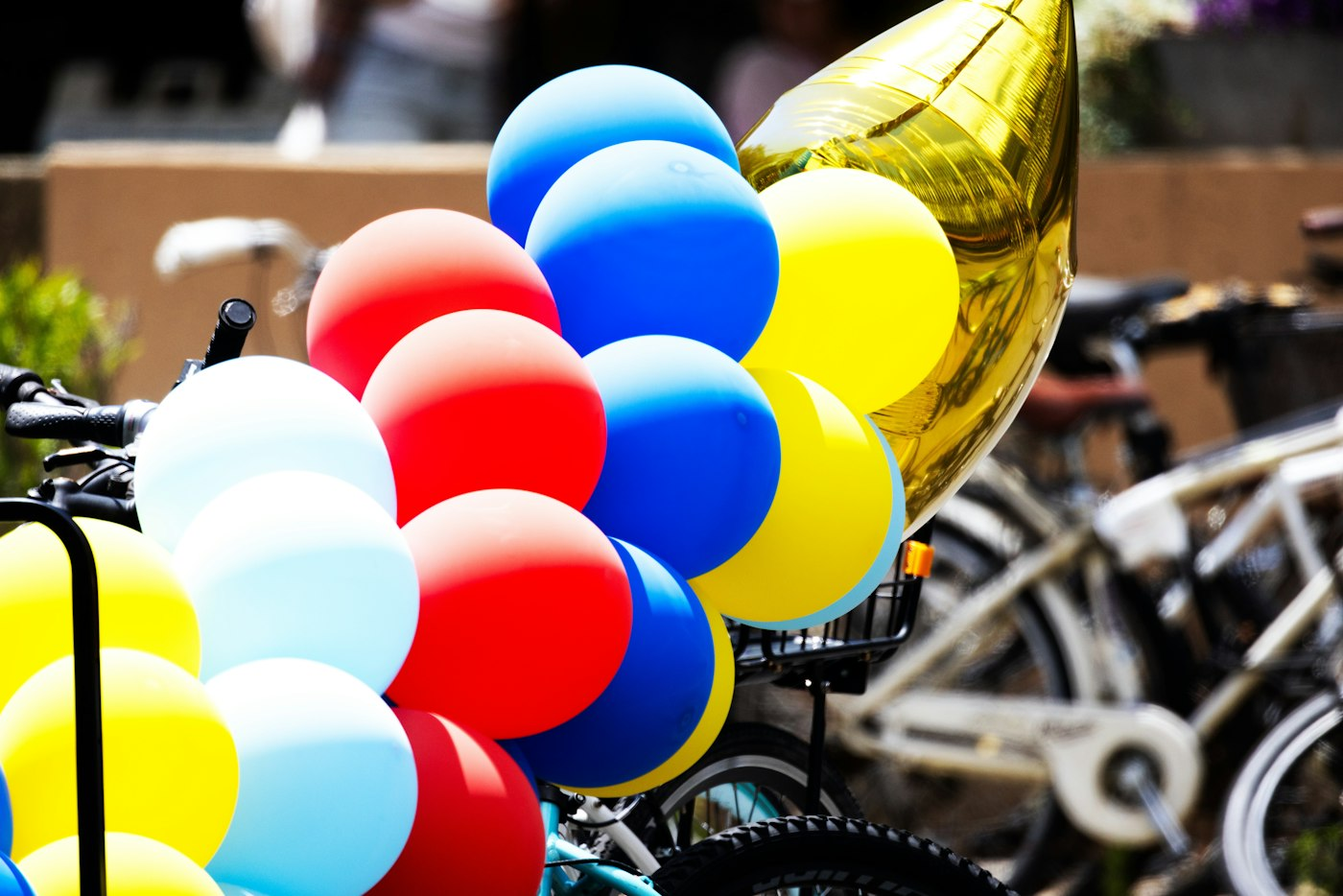
Neighborhood parades have a long history in American towns, especially around summer holidays. A wagon and trike parade is the toddler-sized version: little ones riding in decorated wagons, pedaling trikes or pushing doll strollers, with families cheering along the route. It works as the centerpiece of a party, an end-of-school celebration or a way to bring a street together on a warm evening.
Decorating the Vehicles
Decorating is half the fun, so make it a station at the start of the party. Set out:
- Crepe paper streamers, tissue paper and wide ribbon
- Paper flags, pinwheels and paper plate hubcaps to tape onto wagon sides
- Stickers, washable markers and small cardboard signs
- Painter’s tape, which holds well and peels off without residue
Keep decorations away from wheels, pedals, chains and spokes, where they can tangle and cause a fall. Tape streamers to handlebars and wagon sides, and keep them short enough that they cannot wrap around anything. Avoid strings or cords anywhere near children’s necks.
Safety on Wheels
Any child riding a trike, scooter or balance bike should wear a properly fitted helmet, even on a short route. Ask families to bring their child’s helmet, and remind them on the invitation. Children riding in wagons should stay seated, and an adult should pull or walk beside every wagon. Toddlers pushing doll strollers or riding foot-powered toys need an adult right alongside them too. Check that wagon handles work properly and that each trike fits its rider, with feet reaching the pedals comfortably.
Choosing a Route
The best parade route is short, flat and away from traffic. Good options include a long driveway, a cul-de-sac with the neighbors’ cooperation, a park path or a loop around the backyard. If you are thinking about using a public street, check your city’s website for rules about block parties or street closures, which often require a permit. Station adults at the start, the finish and any spot where the route crosses a driveway or sidewalk. Walk the route yourself beforehand, watching for bumps, slopes, loose gravel and gaps where a small wheel could catch.
Keep it brief. For toddlers, a few minutes of parading is plenty. You can always go around twice.
Making It Feel Like a Real Parade
Small touches make a big impression on young children:
- A grand marshal, such as the birthday child or a grandparent, who leads the way
- Music from a speaker, or a few simple instruments like shakers and drums for walkers
- A cheering section of parents, grandparents and neighbors along the route
- A finish line with a paper ribbon to ride through
End with a snack in the shade and a chance for everyone to admire each other’s decorated wagons. Take a photo of each rider with their vehicle, and if you like, hand out simple paper medals for categories such as most colorful, most streamers and best honk, making sure every child gets one. Years from now, a picture of a two-year-old in a streamer-covered wagon will still make the whole family smile.
Running Parade Day, Step by Step
A wagon and trike parade needs only a little organization to feel like an event. Here is a simple run of show for a party of toddlers and preschoolers:
- Arrival and helmet check (10 minutes): families park their wagons and trikes in a staging area. An adult checks that each rider has a helmet and that it fits snugly.
- Decorating station (25 minutes): streamers, flags and signs go on. Adults handle the tape and the trimming; children choose colors and place stickers.
- Line-up (5 minutes): the grand marshal goes first, then wagons, then trikes, then walkers with strollers. Keeping similar speeds together prevents bumps.
- The parade (5 to 10 minutes): one loop, maybe two, with music and cheering.
- The finish line (5 minutes): each rider rolls through the paper ribbon. Re-tape it for every child so everyone gets the moment.
- Snack, photos and medals (30 minutes): shade, water and admiration for every decorated vehicle.
Getting Helmets Right
Helmets only protect when they fit. A quick check at the staging area takes seconds per child:
- Level on the head. The helmet should sit low on the forehead, not tipped back.
- Straps form a V. The side straps should meet just below each ear.
- Snug chin strap. Roughly one or two fingers should fit between the strap and the chin.
- No wobble. When the child shakes their head, the helmet should move with it.
Keep a spare helmet or two on hand if your family has extras. Helmets come off as soon as the parade is over, and they should never be worn on a soft play setup or playground climber, where straps can catch.
Common Mistakes to Avoid
- Long routes. Little legs tire quickly, and wagons get heavy to pull. Short and repeatable is better.
- Mixing fast and slow riders. A confident four-year-old on a trike can overtake and clip a toddler pushing a doll stroller. Group by speed, or send them in waves.
- Streamers too long. Anything that reaches the ground can catch in wheels. Trim streamers before the parade starts.
- Parading in the heat of the day. Pavement gets hot, and wagons and trike seats can warm in the sun. A morning or early evening parade is easier on everyone.
- Forgetting the walkers. Not every child has wheels. Shakers, flags and drums let walkers join with something special to carry.
Questions Parents Ask
What if my child does not want to ride?
They can walk with a flag, ride in a wagon with a sibling or join the cheering section. Every role counts.
Can we combine a parade with other party activities?
Yes. A parade makes a wonderful opening or closing event, with a play area, bubbles or snacks filling the rest of the party. Keep wagons and trikes off the play area itself.
Is this a good Fourth of July activity?
It is a classic. Red, white and blue streamers and paper flags turn any parade patriotic, and a morning parade before the day gets hot is a gentle way to celebrate with little ones.
How do we keep decorations from falling off mid-parade?
Use painter’s tape generously and wrap it all the way around handlebars rather than sticking it on one side. Do a quick shake test before line-up, and keep a roll of tape at the finish line for repairs.


