

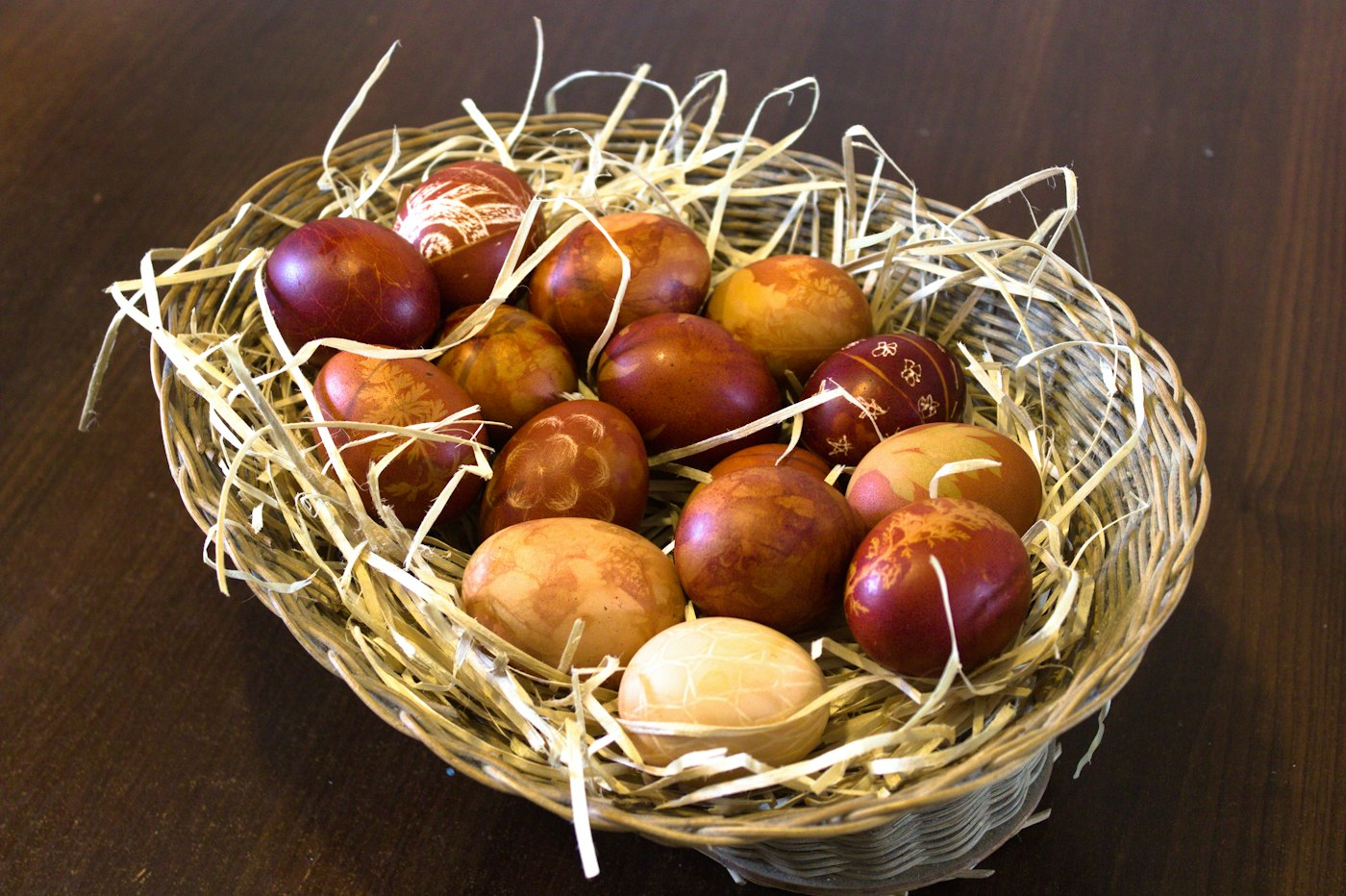
Every spring, children carry baskets across lawns looking for colored eggs, and few of them, or their parents, stop to ask why. The customs surrounding Easter eggs are older and more varied than they look, drawing on ancient symbolism, medieval dietary rules, German folklore and a nineteenth-century American lawn party. Here is a short tour.
The Egg as a Symbol of New Life
Long before Easter, eggs stood for birth and renewal in many cultures. The connection is obvious to anyone who has watched a chick emerge from a shell: something alive comes out of something that looked still. Decorated eggs appear in a number of ancient traditions, and spring festivals around the world have used eggs as symbols of the earth waking up. Christianity drew on this existing meaning, and the egg came to represent the empty tomb and the resurrection.
Why Eggs and Easter in Particular
Part of the answer is practical. For centuries, many Christians abstained from eggs along with meat during Lent, the forty-day period before Easter. Hens kept laying regardless, so eggs accumulated. Preserving them, often by boiling, and then eating them in quantity at Easter made the egg a natural centerpiece of the holiday table. Decorating them turned a leftover into a celebration.
Different regions developed their own styles. In parts of Eastern Europe, eggs were dyed red to symbolize sacrifice. Ukrainian pysanky use layers of wax and dye to create intricate patterns. In many places, decorated eggs were given as gifts.
The Hare Who Brought Eggs
The Easter Bunny is usually traced to German folklore about an egg-laying hare, the Osterhase. German immigrants brought the story to Pennsylvania in the 1700s, and children made nests in which the hare could leave colored eggs. Over time the nest became a basket, the hare became a rabbit and candy joined the eggs. The egg hunt, in which eggs are hidden for children to find, also appears to have German roots and spread with the bunny tradition.
Egg Rolling and Egg Games
Eggs were not only hidden; they were played with. Egg rolling, in which children roll hard-boiled eggs down a grassy slope, is a long-standing tradition in parts of Britain and elsewhere. In the United States, the most famous version is the White House Easter Egg Roll, held on the South Lawn on Easter Monday. It began in 1878 under President Rutherford B. Hayes, after children who had been rolling eggs on the Capitol grounds were turned away following a law protecting the landscaping there.
Other egg games include egg tapping, in which two players knock eggs together and the one whose shell survives wins, and egg-and-spoon races, which need no explanation to anyone who has run one.
From Hens to Chocolate
Chocolate eggs appeared in Europe in the nineteenth century as confectionery techniques improved, and they gradually joined, and in many homes replaced, real decorated eggs. Plastic eggs that open to hold small treats are a more recent addition that made hunts easier to organize and, for parents of toddlers, easier to control.
Knowing where the customs come from gives you more to choose from. A family might dye real eggs the old way with onion skins and beet juice, hold a small egg roll down a backyard slope, try egg tapping with hard-boiled eggs at the brunch table or build a nest instead of a basket, the way children did two centuries ago. For young children, the appeal is the same as it has always been: color, a little mystery and something to find on a spring morning.
Bringing Old Traditions to Your Own Celebration
Many of these customs adapt easily to a family gathering with young children. Here are a few ways to try them.
Dyeing Eggs With Natural Colors
Before commercial dye kits, people colored eggs with what they had in the kitchen and garden. Onion skins give warm golds and rusty browns. Beets give pinks. Red cabbage, surprisingly, tends to give blue. Ground turmeric gives yellow. To try it:
- Hard-boil the eggs and let them cool.
- Simmer the plant material in water until the color is strong, then strain it.
- Add a splash of white vinegar to help the color take.
- Let the dye cool, then soak the eggs, checking them every so often.
- Lift the eggs out with a spoon and set them on a rack to dry.
Results vary from batch to batch, which is part of the charm. For a simple pattern, press a small leaf or flower against the egg and wrap it snugly in a piece of old stocking before dyeing. The adults should handle the hot steps, while preschoolers can help with the leaves and watch the colors change.
A Backyard Egg Roll for Little Ones
You do not need a famous lawn to hold an egg roll. A gentle grassy slope, or even a flat patch of lawn, will do. Give each child a hard-boiled egg and a large spoon. Children push their eggs along the grass toward a finish line marked with ribbon or chalk. For toddlers, skip the spoons and let them simply roll the egg with their hands. Plastic eggs work just as well and do not crack. There is no need for winners; the fun is in the rolling.
Egg Tapping at the Table
Egg tapping is easy for preschoolers to enjoy with help. Two players each hold a hard-boiled egg and gently tap the ends together. Whoever’s egg stays uncracked can challenge the next player. Keep the eggs in the cracked-shell pile out of reach of toddlers, since small bits of shell are not for little mouths.
A Note on Real Eggs
Real eggs are part of the tradition, but they need care. Hard-boiled eggs that will be eaten should be kept refrigerated and not left out for more than about two hours, according to federal food safety guidance. Eggs used for hiding outdoors or for rolling are best treated as decorations, not snacks. Anyone in the family with an egg allergy may need a plastic or wooden egg version of each activity, and it is always kind to ask guests in advance.
Questions Families Ask
At what age can children help decorate eggs?
Toddlers can place stickers on cooled eggs or drop them into cool dye with a spoon, with an adult beside them. Preschoolers can try simple crayon designs before dyeing, since wax resists the color.
Are wooden eggs a good alternative?
Yes. Unfinished wooden eggs can be painted with washable paints, kept for years and used for hunts and rolls without any spoilage.
How do I share the history with young children?
Keep it simple and story-like: long ago, children made nests for eggs, and families colored eggs with onion skins. Then let them try it themselves.
Making Room for Play
A spring gathering that includes egg dyeing or a backyard egg roll often runs long, and young children need somewhere to move between activities. A soft play area set up in a dry spot gives little ones a place to climb and slide while eggs dry or adults finish brunch. If you are planning a spring family gathering with us, let us know which traditions you plan to include, and we can help you lay out the space so the messy crafts and the play area stay comfortably apart.


