

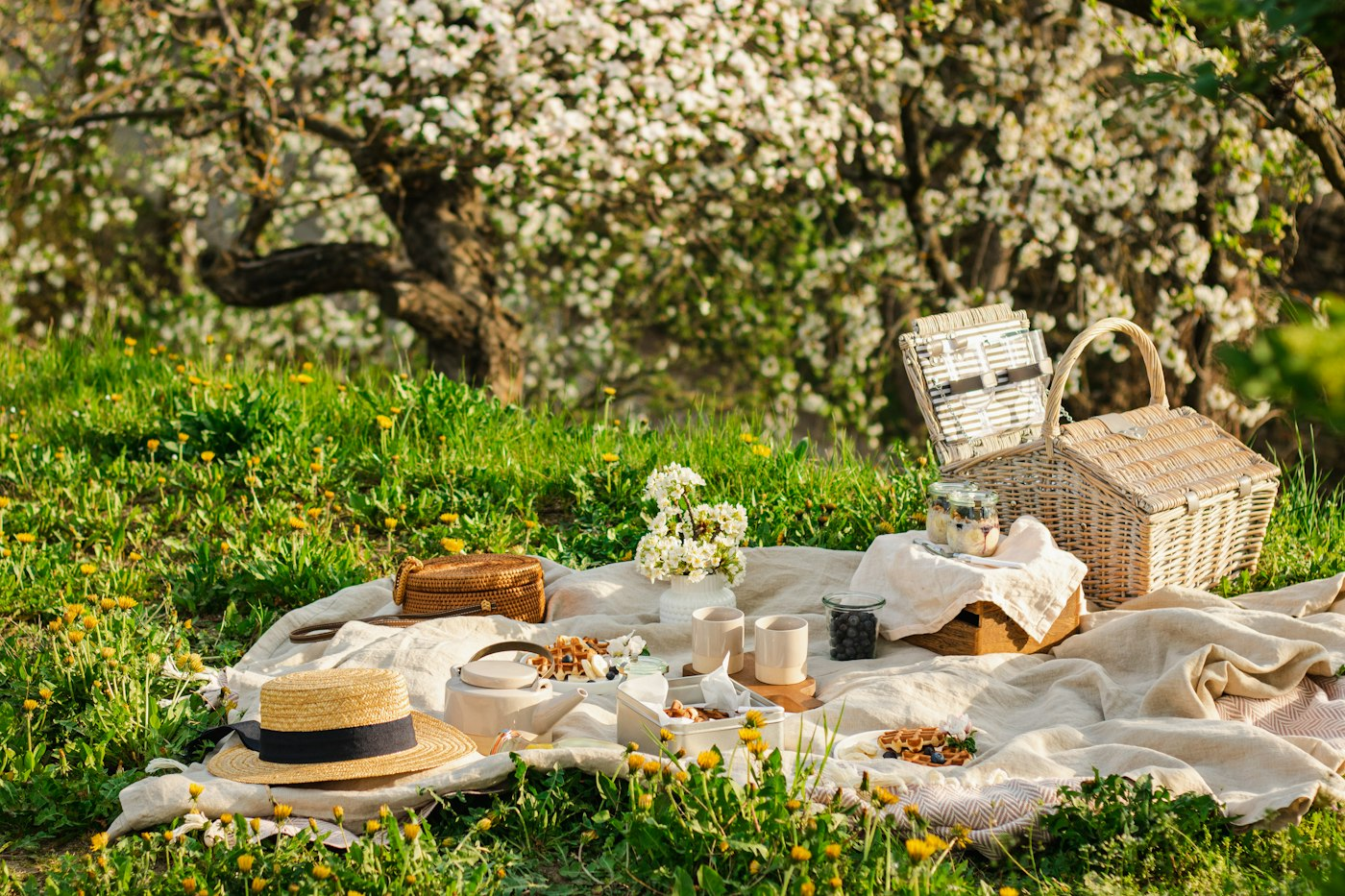
Toddler party food has a few fixed rules: small pieces, soft textures, nothing that poses a choking risk and nothing that sends a two-year-old into a sugar spiral. Within those rules there is room for something lovely. A spring garden table takes the season’s produce and arranges it so the food itself becomes the decor.
Start With What Is Fresh
Spring brings the first truly fresh produce after winter. Depending on your region, look for strawberries, snap peas, radishes, baby carrots, cucumbers, asparagus, spring greens and early herbs. Not all of it suits toddlers as-is, but most of it can be prepared safely. Soft fruit cut small, vegetables steamed until tender and dips thick enough to cling rather than drip all work for young eaters.
Shopping at a farmers market a day or two before the party often yields the prettiest options, and it makes a nice outing with your child.
Arrange It Like a Garden
The idea is a table that looks like a raised bed in full growth. A few ways to get there:
- Stand baby carrots and cucumber spears upright in small cups of hummus or yogurt dip so they look planted
- Fill a shallow wooden tray with a layer of cooked quinoa or crumbled whole-grain crackers as soil, then tuck in halved strawberries and quartered grapes as flowers
- Line a flower-pot-shaped container with parchment and fill it with soft vegetable pieces
- Use a long board or a clean, lined garden trug as the base for everything
Herbs in small pots along the back of the table add greenery and smell wonderful. Keep them out of reach so children do not pull leaves into their mouths unsupervised.
Make It Toddler-Safe
Pretty is not the only goal. Whole grapes, whole cherry tomatoes, raw carrot sticks and large berries are common choking hazards for children under four. Cut grapes and tomatoes lengthwise into quarters, steam or thinly slice carrots and cut strawberries into small pieces. Skip nuts, popcorn and hard candies entirely for the youngest guests. Label anything containing common allergens so parents can scan quickly, and ask about allergies when guests reply.
Add a Few Sweet Touches
A garden table can carry the cake too. A simple white cake with a border of fresh berries looks like it grew there. Yogurt cups topped with granola as dirt and a strawberry on top delight preschoolers. Carrot muffins, lemon bars cut small and fruit skewers on short blunt sticks for older children round things out.
Keep Food in Its Place
Set the garden table in a defined eating area, well away from any play equipment, and plan a hand-washing moment before children return to play. Low tables and small chairs let toddlers eat sitting down, which is safer than wandering with food. Keep cold items chilled until serving and do not leave perishable food out for long stretches, especially if the party spills outdoors on a warm day.
A spring garden table is a quiet kind of showpiece. It looks beautiful, costs little more than ordinary party food and sends children home having eaten something green, which most parents will count as a small miracle.
Step-by-Step: Building the Garden Table
A garden table comes together best in layers. Here is an order that keeps things fresh and pretty:
- The day before: Wash and dry all produce. Cut sturdy vegetables like cucumbers and peppers and store them in airtight containers. Make dips and keep them chilled.
- The morning of: Cut soft fruit such as strawberries and grapes. Steam carrots or asparagus until tender, then cool them quickly in cold water.
- One hour before: Lay out the base, such as a board, trays and small pots. Place herbs at the back of the table.
- Thirty minutes before: Build the “planted” elements, such as vegetables standing in dip cups, and the “soil” trays, but keep them in the refrigerator.
- Just before serving: Move everything to the table, add labels and take a photo before little hands arrive.
Sample Garden Table Menu
Here is a simple menu that suits toddlers and preschoolers, with notes on preparation:
- Strawberry “flowers”: Strawberries cut into small pieces and arranged in a ring.
- Cucumber “leaves”: Thin cucumber slices fanned in a circle.
- Carrot “roots”: Steamed baby carrot pieces standing in small cups of hummus.
- Pea “pods”: Soft cooked peas served in small bowls for little fingers.
- “Dirt” cups: Yogurt topped with soft crumbled crackers and a piece of fruit on top, for children who can manage crumbs.
- Garden sandwiches: Soft bread with cream cheese, cut into flower shapes.
- Lemon water: A pitcher with a few lemon slices, served in lidded cups for children.
Common Garden Table Mistakes
- Serving raw, hard vegetables to toddlers. Raw carrots, celery and snap peas are choking hazards for young children. Steam them or cut them very thin.
- Leaving food out too long. Cut fruit and dips are perishable. Keep them chilled until serving and do not leave them out for long periods.
- Putting the table near the play area. Crumbs and sticky fingers end up on equipment. Keep eating and playing in separate spaces.
- Too much food. Toddlers eat little at parties. A smaller, well-arranged table looks better and wastes less.
- No labels. Parents need to know what is in each dish, especially if allergies are a concern.
Planning the Room
A garden snack table works beautifully with a soft play setup, especially in sage, cream or soft green tones that echo the garden theme. The key is distance. When you plan your room with us, share where the snack table will go, and we can help you place the play area so there is a clear path between eating and playing, with room for a hand-washing stop in between.
Questions Parents Ask
What if my child will not eat vegetables?
That is common. A garden table is about exposure as much as eating. Children who see vegetables arranged playfully may try a bite, and if not, there is always fruit and cake.
Can I use edible flowers?
Only if you are certain they are edible and grown without chemicals. For toddler parties, it is often easier to skip them and use herbs for decoration.
How do I keep the table cool outdoors?
Set dishes on trays of ice, place the table in the shade and bring out small amounts at a time.


