

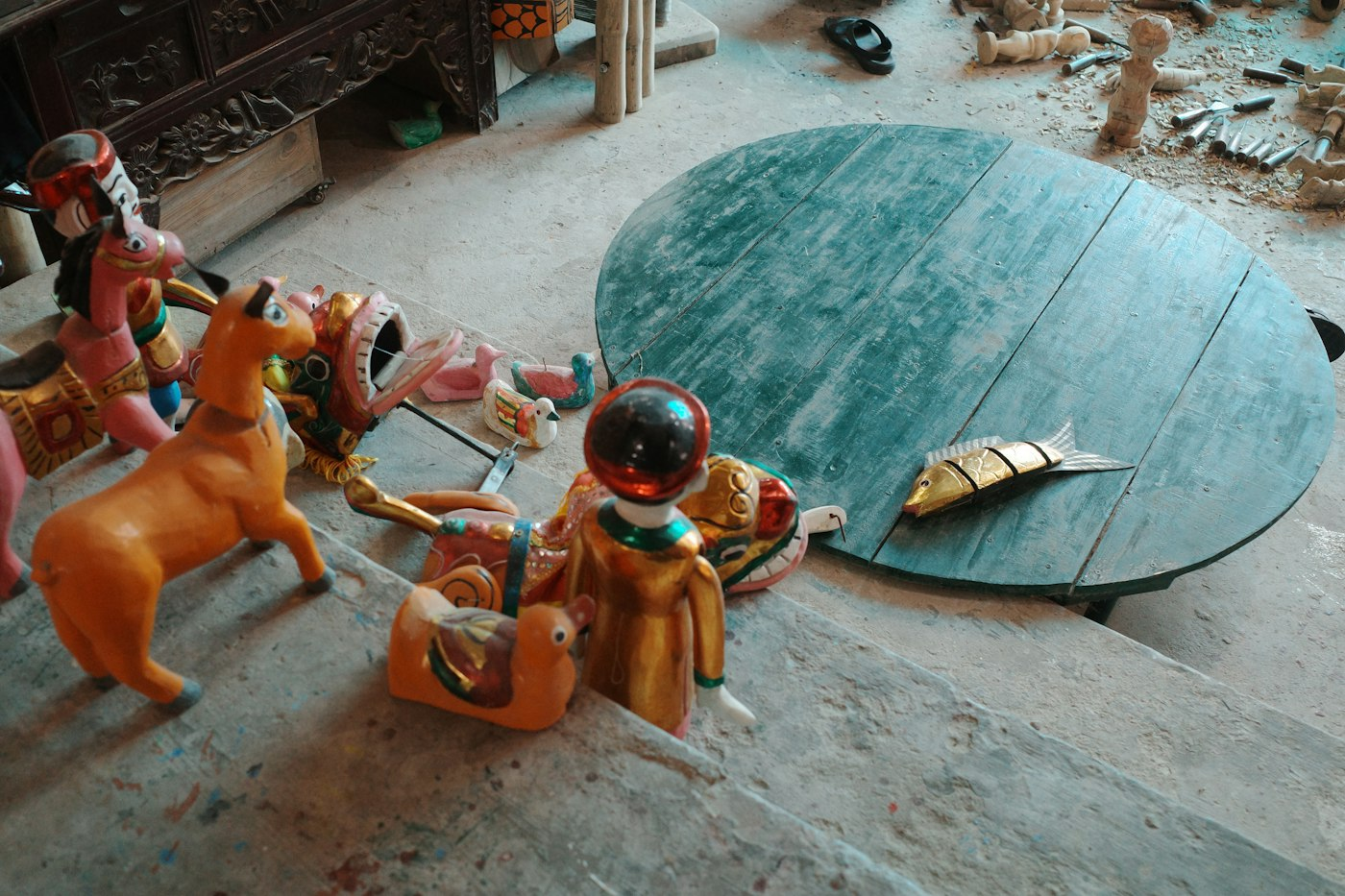
Puppets have entertained children for centuries, in forms as varied as shadow puppets, marionettes on strings and simple hand puppets. They work on young children in a way few things do. A sock with two eyes can hold a toddler’s attention, coax a shy child into talking and turn an ordinary afternoon into a performance. A puppet show party is a perfect indoor plan for a hot day, calm enough for little ones and creative enough for older siblings.
Building a Simple Stage
You do not need anything elaborate. A few easy options:
- A large cardboard box with a window cut in the front, painted or covered in paper
- A table turned on its side, with performers kneeling behind it
- A tension rod in a doorway with a sheet hung across the bottom half
- A blanket draped over the back of a couch
Add a paper sign with the theater’s name, perhaps the birthday child’s name followed by “Playhouse,” and a pair of fabric curtains clipped to the sides. Set up the audience area with floor cushions or a soft play mat so children can sit comfortably close.
Making Puppets Together
A puppet-making station gives children something to do as guests arrive. Choose materials by age:
- Paper bag puppets. Lunch bags with pre-cut paper faces, hair and ears for children to glue on.
- Sock puppets. Clean socks decorated with fabric markers and securely glued felt pieces. For children under three, skip buttons, googly eyes and pom-poms, which can come loose and become choking hazards.
- Stick puppets. Paper characters taped to wide craft sticks, with an adult checking for splinters or sharp edges.
Have a few ready-made puppets on hand for toddlers who would rather play than craft.
The Main Event
Start with a short show performed by the grown-ups. Five minutes is plenty for toddlers. A simple story with repetition and sound effects works best, such as animals searching for a lost friend or a character getting ready for a birthday party. Invite the audience to help by calling out answers, making animal sounds or waving to the puppets.
Then hand the stage to the children. Preschoolers can perform in pairs or small groups, while toddlers may simply pop their puppets up and down behind the stage to cheers. Keep every turn brief, celebrate every performer, and let shy children help as stagehands or ticket takers if they prefer not to perform.
Snacks, Favors and Finishing Touches
Give snack time a theater feel. Hand out paper tickets that guests trade for a snack box, and save popcorn for older children, since it is a choking hazard for little ones. Soft crackers, fruit cups or cheese cubes work for toddlers. Children take home their handmade puppets as favors, perhaps with a paper ticket stub from the show.
The best puppet shows often happen after the party. Parents frequently hear the same story retold for days, which says something about how much a little stage and an audience can mean to a small child.
Planning the Puppet Show Party, Step by Step
A puppet show party comes together in a few simple stages. Here is the approach we suggest.
- Choose the room. Pick a room where the stage can sit against a wall and the audience has space to sit on the floor. A soft play mat or rug in front of the stage gives children a comfortable “front row.”
- Build the stage a day early. Test it with a grown-up kneeling behind it to make sure it is stable and the window is at a good height.
- Write the grown-up show. A simple, repetitive story with a problem, a few tries and a happy ending is all you need. Practice it once out loud.
- Prepare the puppet station. Pre-cut pieces, set out glue sticks and fabric markers and have a drying spot ready.
- Make tickets. Paper tickets for the show and for snacks add to the theater feel.
- Plan the seating. Mark the audience area with cushions so everyone knows where to sit.
A Sample Puppet Story for Toddlers
If you are not sure what to perform, try a story with a repeating pattern, which helps young children follow along and join in.
A little bear is getting ready for a birthday party but cannot find his party hat. He looks under the bed, in the toy box and behind the door. At each spot, he asks the audience, “Is it here?” and the children call out “No!” Finally, a friend puppet pops up wearing the hat on its head, and everyone laughs as the bear says thank you and heads off to the party.
Swap the bear for any animal, add sound effects and let the audience help with every search. Toddlers love being “right” when they shout the answer.
Helping Every Child Take Part
Some children cannot wait to perform; others would rather watch. A few ideas make sure everyone finds a role:
- Ticket takers: Collect tickets at the audience area.
- Curtain pullers: Open and close the curtains at the start and end of each show.
- Sound crew: Shake a rattle, ring a bell or make thunder with a cookie sheet.
- Puppet partners: Perform side by side with a grown-up, who does the talking while the child moves the puppet.
- Audience leaders: Start the applause and the cheering.
Common Mistakes With Puppet Parties
- Shows that run too long. Toddlers’ attention spans are short. Keep every show brief and let children ask for more.
- A wobbly stage. A box or table that tips during a performance can scare or hurt little ones. Weigh it down or brace it against furniture.
- Too many craft supplies. A table covered in tiny pieces overwhelms young children. Offer a few choices at a time.
- Pressure to perform. Never push a shy child onto the stage. Watching is a wonderful way to take part.
- Wet glue at the end. Puppets made in the last half hour may not dry in time. Run the craft early in the party.
Questions Parents Ask
Is a puppet party good for a two-year-old?
Yes. Two-year-olds love watching puppets and popping them up and down. Keep the craft very simple or have ready-made puppets for them.
Can we hire a performer?
Some families do, but a grown-up show with a little enthusiasm is often just as delightful to small children, who mainly want to see a familiar face behind the stage.
What if a child is frightened by a puppet?
Bring the puppet out from behind the stage and show the child the hand inside. Seeing how it works often turns fear into giggles.


