

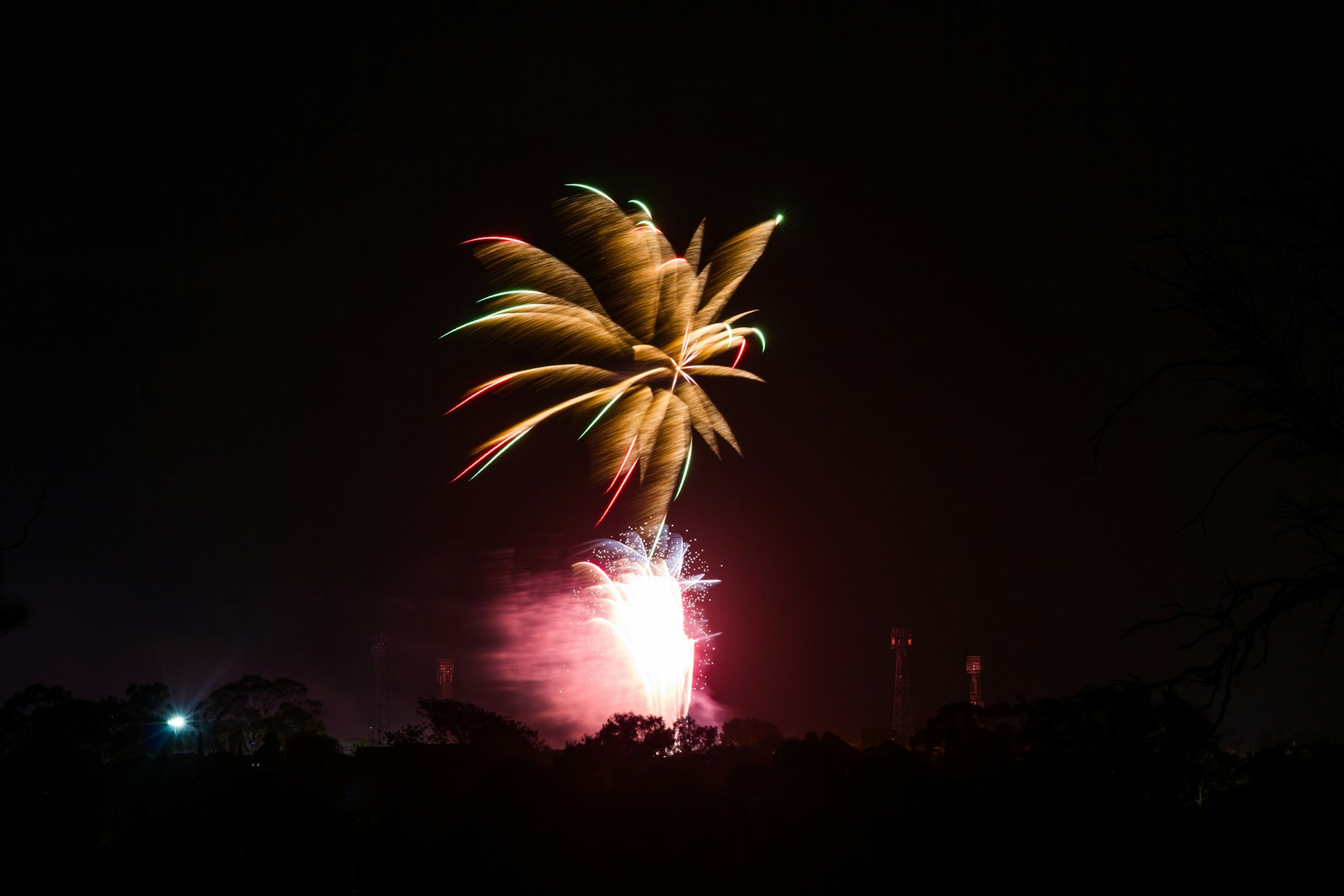
The Fourth of July arrives right after June ends, and many families start making plans now. With toddlers and preschoolers, the holiday’s biggest highlight, the fireworks, brings its own challenges. Shows start after dark, often well past bedtime, and the noise can frighten young children and is loud enough to be a concern for small ears. Planning ahead lets you choose an approach that fits your family.
Decide How You Will Watch
There is no single right way to enjoy fireworks with young children. Some options:
- Attend a public show but watch from the outer edge of the crowd, where the noise is lower and leaving early is easy
- Watch from a distance, such as a hill, a parking area or a friend’s house with a view, where the sound is softer
- Watch from inside, through a window, where the glass muffles the booms
- Watch a televised or streamed show at home, and save the real thing for when children are older
- Skip fireworks this year and celebrate with a daytime parade or picnic instead
Consider how your child handles loud noise and late nights. Some toddlers are fascinated; others are terrified. Either reaction is normal.
Protect Little Ears
Fireworks are loud, and young children’s hearing deserves protection. Hearing protection earmuffs made for children are widely available and are a good choice for babies and toddlers at public shows. They should fit snugly and cover the whole ear. Distance helps too: the farther you are from the launch site, the lower the volume. If your child covers their ears or seems distressed, it is time to move farther away or head home.
Plan for the Late Hour
In early July, darkness comes late across most of the country, so shows usually start well past toddlers’ bedtimes. A later nap that day, pajamas for the car ride home and a plan for carrying a sleepy child all help. Bring a blanket, water and a small snack, and decide in advance when you will leave if your child gets overtired. For crowded events, write your phone number on a wristband or a piece of tape on your child’s clothing in case you get separated.
Leave the Fireworks to Professionals
Fire safety organizations recommend that families enjoy public fireworks displays run by professionals rather than setting off consumer fireworks at home. Even sparklers, often handed to children, burn hot enough to cause serious burns and are not appropriate for young children. Glow sticks and battery-powered light-up toys are safer choices for little hands, with an adult making sure no one chews on them. Fireworks laws vary from place to place, so check your city’s rules before the holiday.
Celebrate in Other Ways
The Fourth of July offers plenty of daytime fun for young children: decorated wagons in a neighborhood parade, red, white and blue crafts, a picnic and a backyard party. Shade, water and sunscreen matter on what is often a hot holiday. If fireworks are part of your plans, let them be a small, happy part of a long, fun day rather than the only thing that counts.
Preparing Your Child Before the Big Night
Young children handle fireworks better when they know what to expect. In the days before the holiday, a little preparation goes a long way:
- Talk about it simply. Explain that fireworks are bright, colorful lights in the sky that make loud booms, and that the booms are part of the show.
- Look at pictures or short videos. Watching fireworks on a screen at a low volume lets children see what is coming in a safe, familiar setting.
- Practice with the earmuffs. Let your child wear their hearing protection at home while playing, so it feels normal before the night arrives.
- Read a story. Picture books about holidays and celebrations can open conversations about loud noises and how to handle them.
- Make a plan together. Tell your child what to do if the booms feel too big: hold a grown-up’s hand, cover ears, or say a code word that means “let’s go.”
A Fireworks Night Packing List
- Hearing protection earmuffs sized for children
- A blanket or folding chairs
- Pajamas for the ride home, or layered clothing over pajamas
- A light jacket or sweatshirt, since evenings near water can be cool
- Water bottles and a small snack
- A flashlight or headlamp for the walk back to the car
- Insect repellent, applied according to the label
- A comfort item, such as a favorite stuffed animal
- Your phone number on a wristband or tape on clothing
- A stroller or carrier for a sleepy toddler
Hosting a Fourth of July Gathering With Little Ones
If you are hosting family and friends for the holiday, a few choices make the day work for the youngest guests as well as the adults:
- Plan the fun for daylight. A backyard party in the morning or early afternoon, with a play area, a wagon parade and a picnic, gives children the best part of the holiday at their best hours.
- Offer a quiet space indoors. A room with the blinds down, a fan and a few books lets overtired children rest, and gives anyone sensitive to neighborhood noise a retreat in the evening.
- Be clear about fireworks. If neighbors are likely to set off fireworks, let guests know, so families with young children or anxious pets can plan.
- Think about pets. Many dogs are frightened by fireworks. Keep household pets indoors and away from the party.
Questions Parents Ask
Are fireworks too loud for a baby?
Many parents choose to keep babies well away from fireworks or indoors during shows. If you do bring a baby, distance and properly fitted infant hearing protection help. Your pediatrician can advise you about your baby.
What if my child is terrified once the show starts?
Leave without fuss. Head to the car, a quieter spot or home. There will be other years, and a calm exit teaches children that their feelings are taken seriously.
Are glow sticks safe?
Generally safe to hold with supervision, but the liquid inside should not be chewed or swallowed. Watch toddlers who put everything in their mouths, and take broken sticks away right away.
What about neighborhood fireworks after bedtime?
A fan, a white noise machine and closed windows can soften the sound. A short talk the day before helps children understand why they might hear booms at night.


