
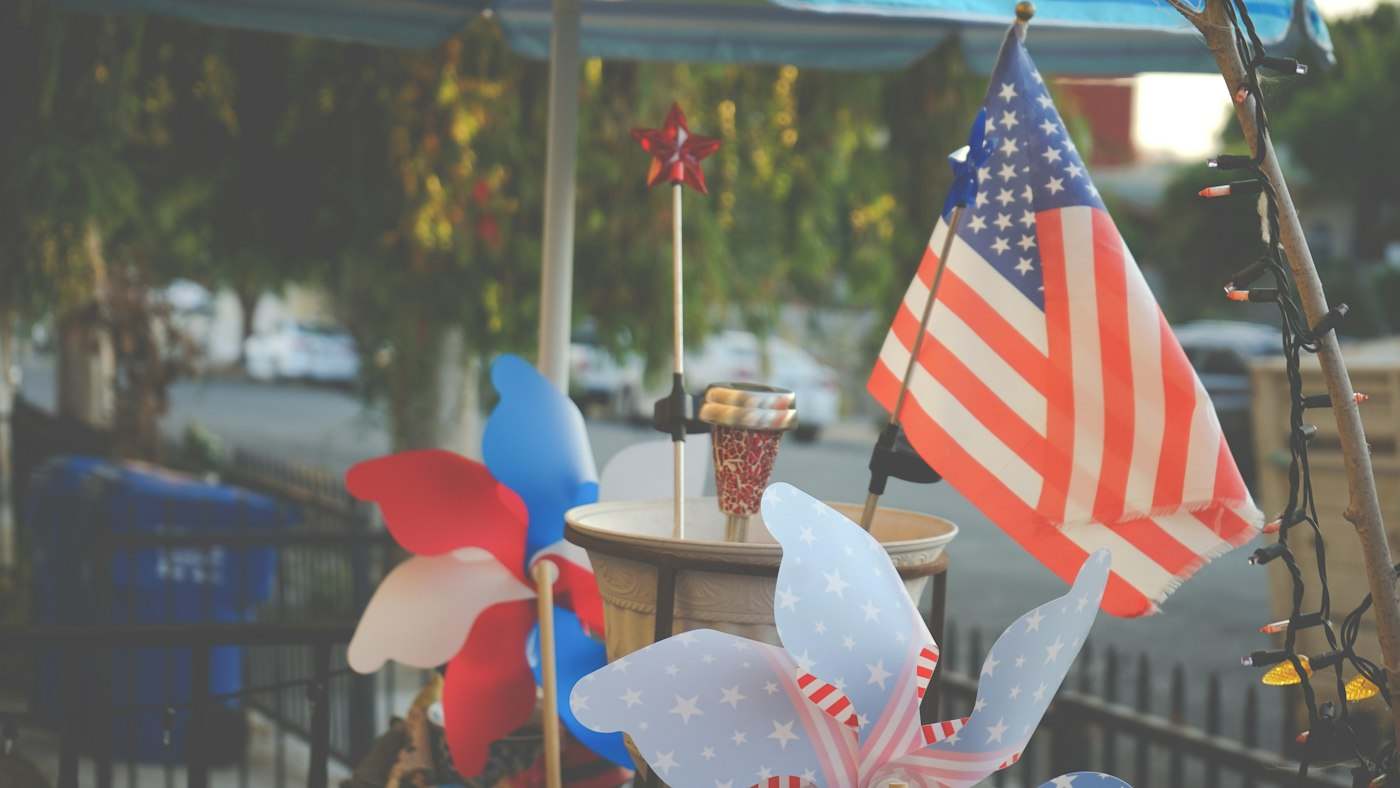
Red, white and blue is one of the most recognizable color combinations there is, and it does a lot of decorating work on its own. The challenge with little guests is that primary red and royal blue, repeated across every surface, can make a room or yard feel busy and loud. A softened version of the palette keeps the holiday spirit while giving the party a calmer, more polished look that photographs beautifully.
Choosing Your Shades
Think of the palette as three families of color rather than three exact shades. For red, consider brick, cherry, coral or a dusty rose. For blue, try navy, denim, chambray or a soft sky blue. For white, cream, ivory and natural linen tones feel warmer than bright white and hide everyday smudges better.
Pick one shade from each family and let one color lead. A navy-led party feels classic and nautical. A cream-led party with touches of brick and denim feels relaxed and vintage. A party built on soft rose and sky blue reads as gentle and young, which suits a first or second birthday that happens to fall near the holiday.
Patterns That Do the Talking
Instead of flag prints on everything, let patterns carry the theme. Stripes and stars are the obvious choices, and a little goes a long way:
- Ticking stripes or gingham on table coverings
- A single garland of paper stars over the food table
- Striped paper straws at the drink station
- Denim or chambray napkins that can go in the wash
- Star-shaped cookie cutters for sandwiches and fruit
Natural textures help, too. Galvanized buckets for drinks, wooden crates for favors and a few jars of white flowers keep the look grounded and summery.
A Few Flag Etiquette Notes
The United States Flag Code offers guidelines for displaying and respecting the flag. It is advisory for private citizens, and plenty of families happily use flag-themed party goods, but some hosts like to know what it says. Among other points, the code advises that the flag should not touch the ground, should not be used as a costume or as drapery, and should not be printed on items meant to be used once and thrown away, such as paper napkins.
The code also describes red, white and blue bunting, arranged with blue on top, white in the middle and red on the bottom, as the appropriate choice for general decoration. That makes bunting, stripes and stars a natural fit for hosts who want to be thoughtful. If you display a real flag, hang it where little hands cannot pull it down.
Keeping It Toddler-Friendly
Whatever shades you choose, place decorations with small children in mind. Keep garlands, streamers and anything with string well above reach. Skip small decorative pieces like confetti stars and loose beads, which can be choking hazards, and secure tablecloths so they cannot be pulled down with everything on top. Outdoors, weigh down lightweight items, since summer breezes can send them sailing.
A softened palette also makes it easy to blend the party decor with a soft play setup or a play corner. Cream and white play pieces, a navy throw and a few star pillows tie the play area to the rest of the party without adding clutter where the children are moving.
Putting the Palette Into Practice: Three Sample Setups
Seeing a full plan can make it easier to choose. Here are three softened Fourth of July looks we like for little guests, each built from the same basic pieces.
Classic Navy
- Lead color: Navy, with cream and brick red as accents
- Table: Cream cloth with a navy runner, brick red napkins and white enamel or melamine plates
- Accent: A paper star garland in cream and navy across the food table
- Play area: Cream and navy soft play pieces with a striped throw nearby for grown-ups
Vintage Picnic
- Lead color: Cream, with denim blue and cherry red
- Table: Red gingham over a wooden picnic table, mason jars of white daisies and galvanized buckets for drinks
- Accent: Fabric bunting with blue on top, white in the middle and red on the bottom
- Play area: A denim-blue blanket corner with board books and soft blocks
Soft and Sweet
- Lead color: Sky blue, with dusty rose and ivory
- Table: Ivory linen, pale blue plates and rose-pink striped straws
- Accent: A small cluster of balloons in the three shades, tied high
- Play area: Pastel soft play shapes that suit a first or second birthday
A Decorating Order That Saves Time
- Start with what cannot move. Table placement, shade and the play area come first.
- Add the large color pieces. Tablecloths, runners and blankets set the palette at a glance.
- Hang overhead decor. Bunting and garlands go up next, safely above reach.
- Place the small touches. Flowers, straws and napkins come last, often right before guests arrive.
- Walk the space at toddler height. Crouch down and look for anything grabbable, pullable or tippable.
Common Decorating Mistakes
- Matching every shade exactly. A softened palette looks best when tones vary a little. Mixing navy with denim or cherry with brick adds depth.
- Too many themed paper goods. Flag-print plates, cups, napkins and banners all at once can feel cluttered and tend to be single-use. Pick one or two themed pieces and keep the rest plain.
- Forgetting the wind. Paper stars, plates and napkins blow away fast outdoors. Use weights, clips and heavier tableware.
- Ignoring the sun. Dark navy and deep red fabrics can heat up in direct sun. Use lighter shades for anything children will sit on.
Questions Hosts Ask
Can I reuse the decorations?
Fabric bunting, denim napkins and galvanized buckets work for Memorial Day, Labor Day and summer cookouts too, which makes them worth the investment.
What about a birthday that falls on the Fourth?
Let the birthday lead and the holiday support it. A child’s name banner in navy with a few star accents keeps the focus on them while nodding to the day.
How far ahead should I gather supplies?
Holiday decorations sell out quickly in late June. Shopping two to three weeks ahead gives you time to find the shades you want and to swap anything that does not look right together.
Do I need a real flag?
No. Bunting, stars and stripes carry the theme on their own. If you do display one, hang it high and follow the Flag Code’s basic guidance.


