
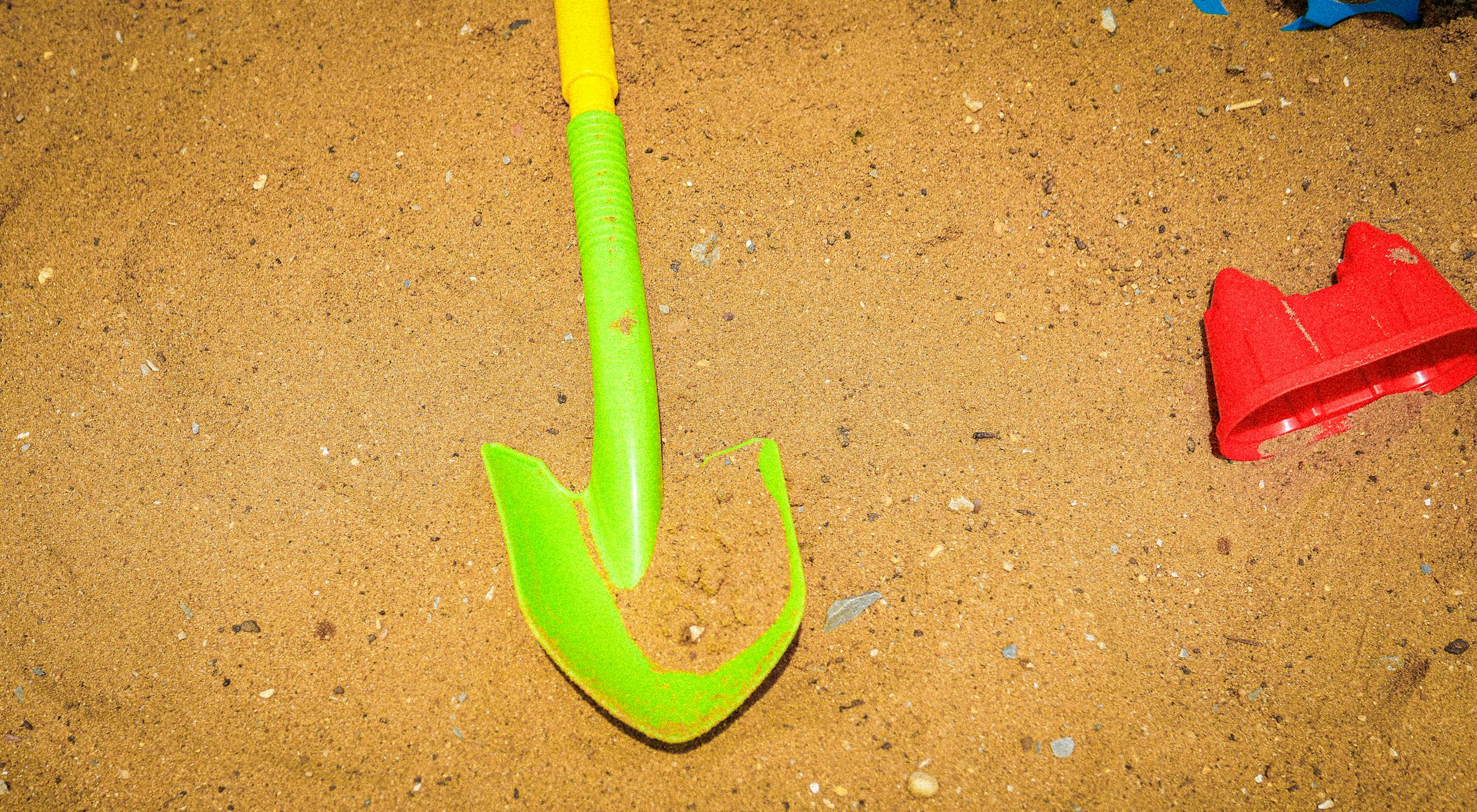
A sandbox or sand table is one of the simplest ways to keep toddlers busy for a long stretch. Digging, pouring and building feel endlessly satisfying at this age. Sand also travels like nothing else. It ends up in shoes, socks, diapers, hair, cushions, ball pits and, eventually, every corner of the house. With some planning, you can keep the joy of sand play and limit how far the sand goes.
Set Up the Sand Station
Choose a sandbox or sand table with sides high enough to keep the sand in. For a party, a sand table at toddler standing height often works better than a ground-level box, since children stay outside it rather than climbing in. Use play sand sold for children’s use, and keep it slightly damp to cut down on dust and help it hold its shape for building.
Stock the station with scoops, buckets, molds, sieves and toy trucks, and skip tiny toys that can get lost in the sand or end up in a mouth.
Keep It Clean Between Uses
Keep a sandbox covered whenever it is not in use. An uncovered sandbox collects leaves and rainwater and can attract neighborhood cats and other animals looking for a litter box. Before the party, uncover it, rake through the sand and remove any debris. If the sand is old, dirty or smells unpleasant, replace it. After the party, let the sand dry before covering it again.
Place It Far From Soft Surfaces
Location does more to control sand than anything else. Put the sand station on the far side of the yard from the soft play area, the snack table and the back door. If possible, set it on grass or a patio with some distance before any path that leads to the house, so loose sand drops off along the way. Never put sand play inside or right next to a soft play area or ball pit, where sand is very hard to remove.
Build a Brush-Off Stop
A simple brush-off stop between the sand and everything else keeps most of it outside:
- A doormat or outdoor rug to stand on
- A soft brush for knees, arms and feet
- A bucket of clean water and a towel for rinsing feet, emptied after use and always watched
- A bench for taking off and shaking out shoes
Ask children to dust off and step through the stop before heading to other activities. Make it part of the game by calling it a car wash for sandy hands and feet.
A Few Sand Rules
Keep the rules short: sand stays low, sand stays in the box and no throwing. Sand in the eyes is the most common problem; rinse gently with clean water and discourage rubbing, and contact a doctor if irritation continues. Shake out sandy clothes outdoors before bagging them, and send families home with a reminder to check shoes and diapers before getting in the car. With a little order, sand play stays one of summer’s simplest pleasures.
Preparing the Sand Ahead of Time
Good sand play starts with good sand. A few steps in the days before the party make the station cleaner and more fun:
- Inspect the sand a few days ahead. Uncover the box or table and look for debris, insects, mold or animal waste. If anything seems off, replace the sand entirely.
- Rake and sift. A garden rake or a large sieve brings up hidden sticks, stones and old toys.
- Let it air out. On a sunny, dry day, leave the sand uncovered for a few hours, then cover it again overnight.
- Check the sides and lid. Look for splinters on wooden sandboxes, cracks in plastic tables and sharp edges on lids.
- Dampen it on party morning. A light sprinkle with a watering can helps the sand hold together for building and reduces dust.
Sand Activities by Age
For young toddlers
Big scoops, buckets and sieves. Filling and dumping is the whole game, and it never gets old.
For two- and three-year-olds
Molds and simple building. Sand castles, sand cakes with a candle stick and toy trucks hauling sand from one side of the table to the other.
For four- and five-year-olds
Treasure hunts. Bury large plastic gems, shells or coins and give each child a small shovel and a list of what to find. Add a sieve for sifting out the treasure.
Bringing a Beach Theme to the Station
Sand play fits naturally into a beach or under-the-sea party. A blue tablecloth under the sand table suggests water, and a sign reading “Beach Open” makes it feel like an outing. Large plastic shells, toy boats and sea creature molds carry the theme. At a construction or dinosaur party, the same sand becomes a dig site with toy excavators or buried dinosaur bones. If you are planning a soft play setup for the same party, our team can help you think about where to place each area so sand and soft surfaces stay well apart.
Common Mistakes to Avoid
- Using construction sand. Sand sold for building projects is not meant for children’s play. Use sand labeled for play.
- Overfilling the table. A sand table filled to the brim spills over the moment play begins. Leave a few inches at the top.
- Setting the station by the door. Sand by the back door ends up in the house. Put it at the far end of the yard.
- Too many children at once. Four or five toddlers around a sand table is plenty. More means sand flying.
Questions Parents Ask
What should children wear for sand play?
Clothes that can be shaken out, and shoes that slip off easily. Mention sand on the invitation so parents can dress children accordingly.
How do we clean sand out of a diaper?
A gentle rinse and a fresh diaper is usually easiest. Keep wipes and a few spare diapers near the brush-off stop.
Can we use a beach towel as a sand mat?
A large old towel or a fitted sheet spread beneath a sand table catches a surprising amount of spilled sand. At the end of the party, gather the corners, carry it to the garden or the sandbox and shake it out.
How do we clean sand toys afterward?
Rinse them in a bucket of water, let them dry fully in the sun and store them in a mesh bag so moisture does not collect.


