
Parents planning a party for a young child quickly discover there are many kinds of play rentals, and they are not interchangeable. A setup that thrills a seven-year-old can frighten or injure a toddler. A setup perfect for a one-year-old will bore a kindergartner in minutes. Here is a plain explanation of the main types and how to match them to the ages of your guests.
Soft Play
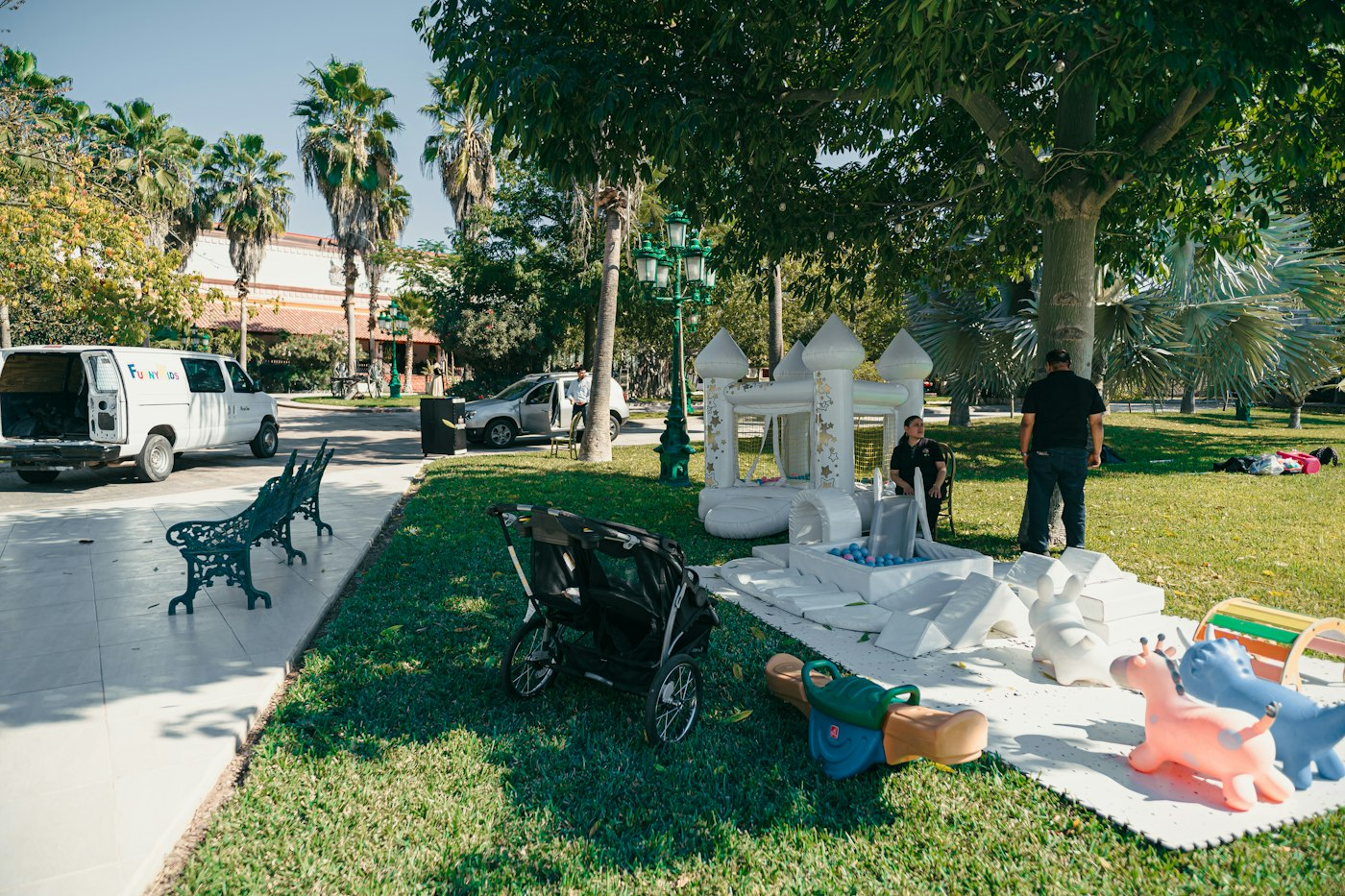
Soft play refers to padded foam shapes, low climbers, small slides, steps and tunnels covered in vinyl or similar material. Pieces are low to the ground, lightweight and designed for crawling, climbing, sliding and tumbling without hard edges. Soft play suits babies who are crawling, toddlers who are finding their feet and preschoolers who like to climb and pretend. Its strength is that it works for many children at once, each at their own pace, with no waiting in line.
Because it is low and soft, falls are short and landings gentle. It still requires supervision, since toddlers can collide, and older children can overwhelm the space.
Bounce Houses
Inflatable bounce houses are large, air-filled structures with a bouncing floor and netted walls. They are designed for jumping, and jumping is the challenge. Toddlers who are unsteady on solid ground struggle on a moving surface, and the real danger comes when larger children bounce alongside smaller ones. Most bounce house guidance recommends grouping children by size and keeping numbers low.
Bounce houses tend to suit children from about preschool age upward, with strict adult supervision and separate turns for little ones if they use it at all. They also require outdoor space, a blower and a power source, and they must be anchored properly, especially in wind.
Ball Pits
A ball pit is a shallow enclosure filled with plastic balls. Children love the sensation of sinking in and the sound of balls spilling. Ball pits suit sitting babies, toddlers and preschoolers, and they are often part of a larger soft play setup. The key safety points are depth, keeping the pit shallow enough that a small child’s head stays above the balls, and cleanliness, since balls touch everything.
Ask any provider how balls are cleaned between events. Keep food, drinks and shoes out, and watch for balls escaping underfoot, where they become tripping hazards.
Matching the Setup to Your Guests
A simple way to think about it:
- Mostly under two: soft play with a shallow ball pit, no bounce house
- Two to four: soft play, ball pit and possibly a small toddler-specific inflatable, used with rules
- Mixed ages up to seven or eight: soft play for the little ones and a separate bounce house for the big kids, with a clear line between zones
- Mostly school age: a bounce house or active games; soft play will feel babyish to them
Questions Worth Asking Any Provider
Whatever you choose, ask about recommended ages, how many children the setup holds at once, how it is cleaned, what space and surface it needs and what supervision they expect from you. A good provider welcomes these questions. Matching the equipment to the children, rather than to a photo you liked, is the single biggest factor in whether the play area becomes the heart of the party or the source of its tears.
Step-by-Step: Choosing the Right Setup
When you are deciding which kind of play rental fits your party, work through these questions in order:
- Who are the youngest guests? The youngest children set the baseline for safety. If babies or new walkers are coming, plan for their needs first.
- Who are the oldest guests? If school-age children are coming, think about whether they need their own space or activity.
- Where is the party? Indoors, outdoors or both? Some setups only work in one or the other.
- How much space do you have? Measure the room or yard and allow extra room around the equipment.
- How many children will play at once? Plan for the busiest moment of the party.
- How many adults can supervise? More active setups need more watching.
- What look are you hoping for? Color and style matter for photos and themes, but they come after safety and fit.
Mixing Setups Safely
Many family parties include a wide range of ages, from crawling cousins to school-age siblings. In that case, combining setups can work well, as long as each one has its own space. A few principles help:
- Keep zones clearly separate. Leave a gap between the soft play area and any bouncing equipment, and use a visual marker such as a rug, a low barrier or a row of cushions.
- Assign an adult to each zone. Each area needs its own watcher, especially when ages are mixed.
- Explain the rules to children. Big kids should know where they can play and why the soft play area is for the little ones.
- Watch transitions. Children moving between zones often run. Keep the path clear.
Common Mistakes When Choosing Play Rentals
- Choosing from photos alone. A setup may look perfect online but be wrong for your guests’ ages or your space.
- Letting all ages share one setup. Mixing toddlers and school-age children in the same equipment is the most common source of bumps and tears.
- Forgetting the space around the equipment. Children need room to enter, exit and move around safely.
- Overestimating how long children will play. Even the best setup holds attention for a while, then children want a snack, a story or a break. Plan other activities too.
- Skipping the supervision plan. No setup replaces attentive adults.
What This Means for Your Party
For most parties with children under five, soft play is the foundation. It suits the widest range of young ages, works indoors and out, and looks lovely in photos. A ball pit adds sensory fun for babies and toddlers. Bounce houses are better for older children and need more space, power and supervision.
When you contact us, share the ages of your guests, your space and your party plan. We focus on soft play and can help you choose pieces that fit the children who will actually be there. If you also need something for older children, we can talk through how a separate zone might work in your space.
Questions Parents Ask
Can babies use soft play?
Yes, babies who are crawling or sitting enjoy low, soft pieces. Keep them in a calmer corner away from busy toddlers.
What about a ball pit for a one-year-old?
A shallow ball pit with constant adult supervision can be a delight for babies who sit steadily. Keep it shallow and keep an adult within arm’s reach.
How do I know how many children a setup holds?
Ask your provider. The answer depends on the size of the setup and the ages of the children.


